
It's The End, The End Of The Century: The League of Extraordinary Gentlemen Returns!
/
In the final weeks before the release of League of Extraordinary Gentlemen Volume III: Century Book One (whew!), I thought I’d look back at the previous LOEG books, ‘cause, you know…any excuse to read that stuff again. Contextually, though, it turns out it made a lot of sense, as the series keeps changing and evolving, so a look at its development might provide proper context for where it is now/where it’s heading. So, this time around, I’m going to examine what’s come before, and then have a look at what’s going on now, with LOEG Vol. III (which is actually the fourth LOEG project, but more on that in a bit).

Alan Moore and Kevin O’Neill kicked off this series in 1999 (ten years ago? Seriously? Jeez!) under the DC/Wildstorm imprint America’s Best Comics, a Moore-created label that he would eventually abandon because of his, shall we say, fractious relationship with parent publisher DC. The initial six-issue miniseries was a fairly high-concept adventure tale that introduced Moore and O’Neill’s Victorian-era covert military unit, comprised of famous literary heroes like Mina Murray (heroine of Bram Stoker’s Dracula), Allan Quartermain (star of H. Rider Haggard’s King Solomon’s Mines), Captain Nemo, Dr. Jekyll/Mr. Hyde, and the Invisible Man. The first LOEG series is a pretty straightforward three-act adventure—the team is assembled, they go on a mission to thwart Fu Manchu, and they eventually regroup to take down their true nemesis, Professor James Moriarty (who is also their employer, the mysterious spymaster “M”). The inaugural volume quickly establishes that the League’s adventures take place in an alternate universe where all fantastical fiction of the era resides side-by-side—look for allusions to Edgar Allan Poe, Charles Dickens, Edgar Rice Burroughs, H.P. Lovecraft, and literally hundreds of other authors and their works. To truly appreciate the scope of what Moore and O’Neill have done, be sure to check out Jess Nevins’ remarkable annotations of all the LOEG books (or buy the old-fashioned book versions of same, available now from Monkeybrain Press).
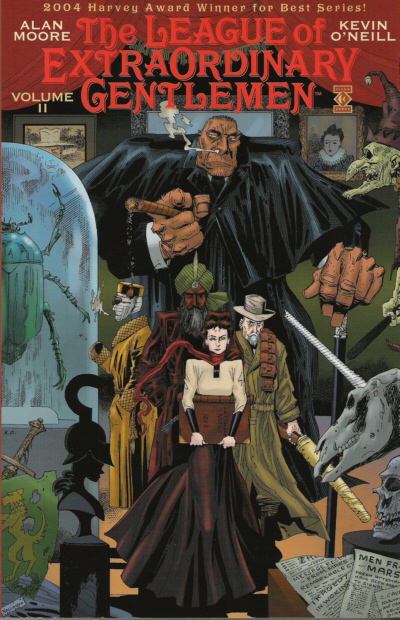
LOEG Vol. II picks up almost immediately after the conclusion of the first miniseries, although it’s constructed very differently—the framework of its plot is built around an existing narrative, namely H.G. Wells’ War of the Worlds. When the Martian tripods launch their assault, the League is there behind the scenes, participating in the campaign against the invaders and inevitably helping to destroy them (although the League as we know it is pretty much undone in the process). Moore and O’Neill are careful not to interfere with the events in Wells’ novel, but they do find all sorts of cool ways to integrate those events into the League’s larger fictional world. New characters, like Wells’ Dr. Moreau, are introduced, and not all the heroes from the first series survive.
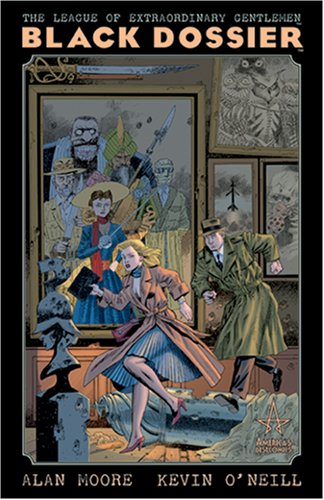
With the third book, Black Dossier, the original intent was for Moore and O’Neill to create a sort of sourcebook for the fictional universe the League inhabits, but the creators got a bit more ambitious; the Dossier of the book’s title forms the basis of the sourcebook, detailing several centuries of the League’s different incarnations and adventures. However, this is contained within a framing sequence set in the 1950s, where the two surviving heroes of the first series steal the Dossier from British Intelligence, and are relentlessly pursued by James Bond, Emma Peel, and Bulldog Drummond. The Dossier excerpts are mostly told in prose, and include an unfinished Shakespeare play, a P.G. Wodehouse-style short story where Jeeves and Wooster meet Cthulhu, a Kerouac pastiche, and a Tijuana Bible inspired by Orwell’s 1984. There’s even a 3D section at the end (glasses included!), and a flexi-disc original song recording was planned but was abandoned during a long and ugly fight with parent company DC. The Black Dossier tried the patience of a lot of fans with its extended prose sequences, but if you can make time for them, it’s worth it. Among some of the fascinating details Moore and O’Neill reveal about their universe: Prospero, hero of The Tempest, was the first agent of the Crown to be codenamed 007, Dean Moriarty of On The Road was a distant relative of Professor Moriarty, and the England of the LOEG world went to war in 1939 not with Adolf Hitler but Adenoid Hynkel, Charlie Chaplin’s character in The Little Dictator. Granted, it would definitely have been cool to see the League take on their German and French counterparts, but we’ll have to settle for the abridged recaps in the chapter titled The Sincerest Form of Flattery.

Which brings us, finally, to the latest LOEG adventure, Century. The first of three 80-page volumes—stand-alone adventures that comprise a larger story spanning 100 years—Book One takes place in 1910. The current incarnation of the League, which includes a now-immortal Mina Murray and Allan Quatermain, gentleman thief A.J. Raffles, and gender-bending, ageless adventurer Orlando, acts upon the ominous visions of their psychic teammate Thomas Carnacki, who has seen that a sect of mystics may have engineered events to bring about the end of the world. Also, a plague of Jack the Ripper-style slayings besets the East End of London, and the rebellious daughter of former League member Captain Nemo finally inherits her position as the Captain of the dreaded Nautilus.
This newest LOEG series runs the risk of alienating readers drawn to the initial high-concept of the earlier books, as the cast of characters grows increasingly obscure. That shouldn’t be seen as a deterrent, however; Century has plenty of humour, violence, and portents of a dark future to satisfy fans. The apocalyptic plot conceived by the Crowley-like mystic Oliver Haddo and his sect probably won’t truly bear fruit until the end of the series, which will take place in the present day, making that portion of the story a bit unsatisfying (for now, anyway). In the meantime, though, Moore’s depiction of his heroes bickering like the world’s weirdest dysfunctional family is hilarious, and his gift for using song in his narrative, used to great effect in V For Vendetta and Top Ten, is on full display here—much of Book One’s plot is told in the form of Threepenny Opera, incorporating lyrics and characters from Mack the Knife and Jenny Diver. Kevin O’Neill’s artwork here is the tightest it’s been in a while, packed with obscure detail (is that the fertility idol from Raiders of the Lost Ark in one panel?) and terrific character detail. The dockside siege of London by the Nautilus’ pirate crew is particularly exciting, and pretty gory to boot. The text piece at the end, which ties together several fictional narratives and characters involving the moon, has lots of surprise cameos as well, like Stardust the Super-Wizard (last seen in Fantagraphics’ amazing collection of Fletcher Hanks comics, I Shall Destroy All The Civilized Planets!). New publisher Top Shelf has put together an appealing square-bound format for this book, and I can’t wait to see what the always-reliable publisher has planned for the inevitable collected edition. The new, extended format of this series will hopefully tide people over in the wait between volumes, but as long as Century doesn’t take 100 years to finish, I’ll be happy to wait.





 Cliff Steele, former racecar driver, had his brain placed in a powerful robotic shell following a terrible accident. He's been the Martian Manhunter of the Doom Patrol, having been a member of every incarnation so far. And noone has yet stabbed him fatally with a fire spear!
 Larry Trainor was a test pilot who flew too high one day and was filled with radiation. Now he himself is radioactive, necessitating that he wear specially-treated bandages in order to keep the people around him safe. On the plus side, he can release the super-fast energy being Negative Man from his body in order to do his bidding. On the minus: if Negative Man is away for more than sixty seconds, Larry will die.
 Steve Dayton! Billionaire industrialist, philanthropist, inventor, super-hero! Steve Dayton, AKA Mento! Not really a member of the Doom Patrol, but associated heavily-enough with them that I include him here.
 Rita Farr was a movie star and (I think) an Olympic swimmer before she was exposed to strange gases and gained the power to grow or shrink at will. Later, she refined the ability so that she could grow only a part of herself at a time.
 Niles Caulder is the genius behind the Doom Patrol: the man who placed Cliff Steele's brain into the Robotman body, who coordinates the Patrol's activities and who creates all of the scientific devices that they require to fight monsters and other weirdies.
 Look everyone, it's Garfield "Gar" Logan! Given an experimental serum when dying of a rare illness, he turned green and gained the ability to turn into various animals! If you grew up during the Eighties or Nineties, you might know him better as Changeling!

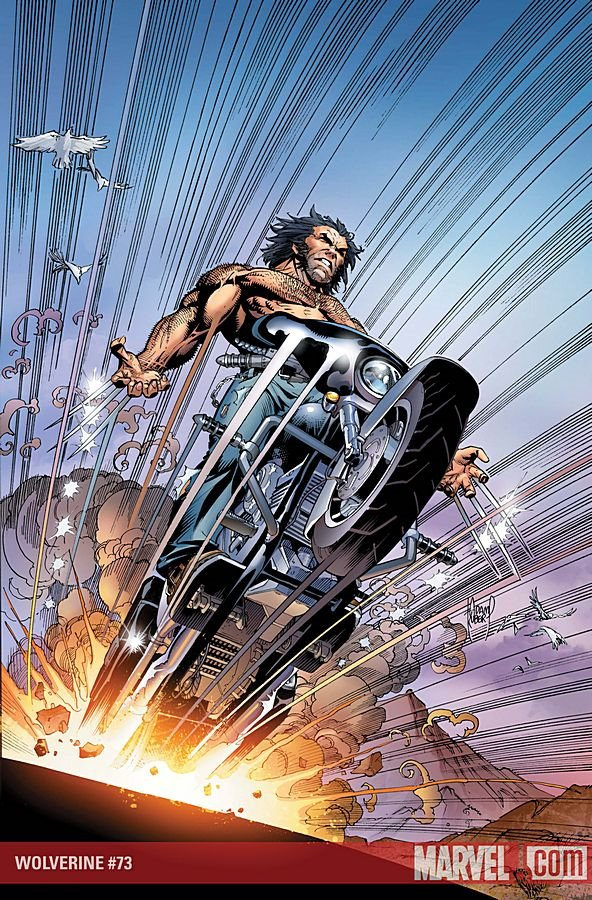
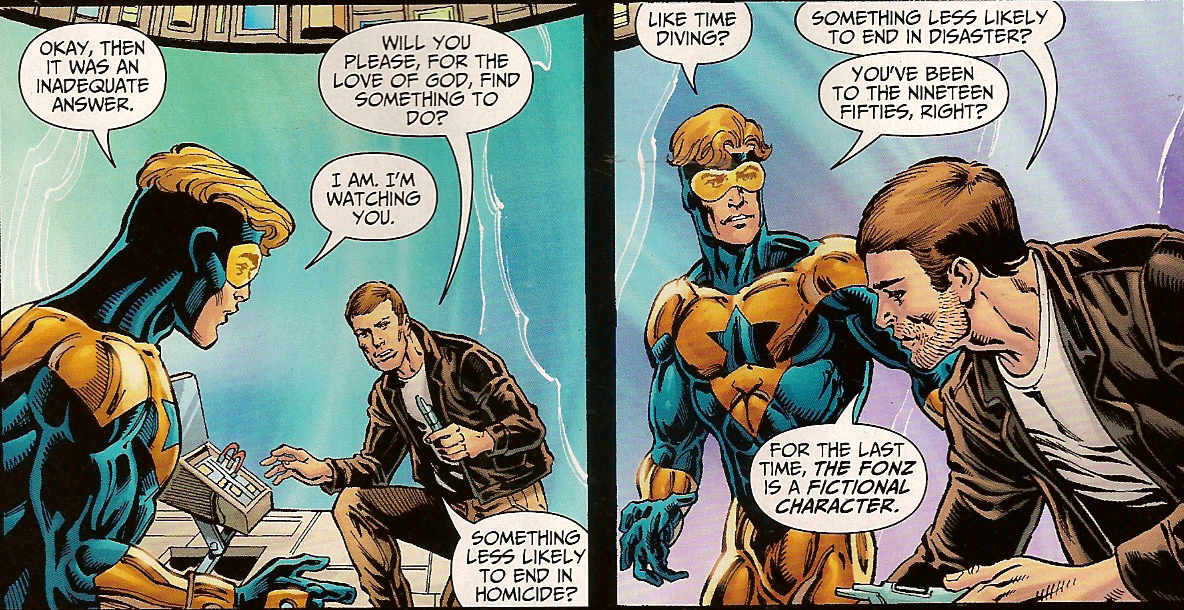

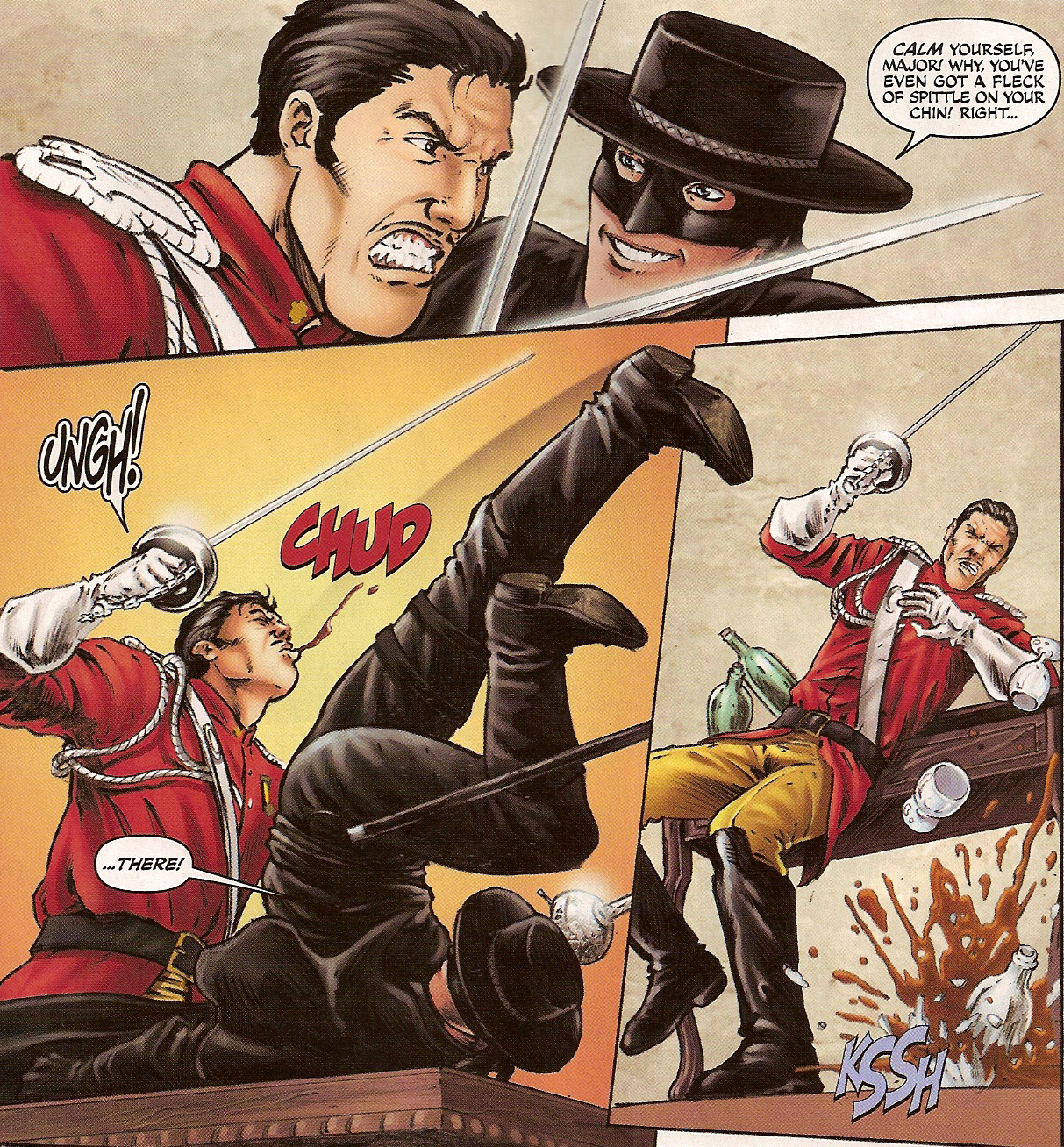

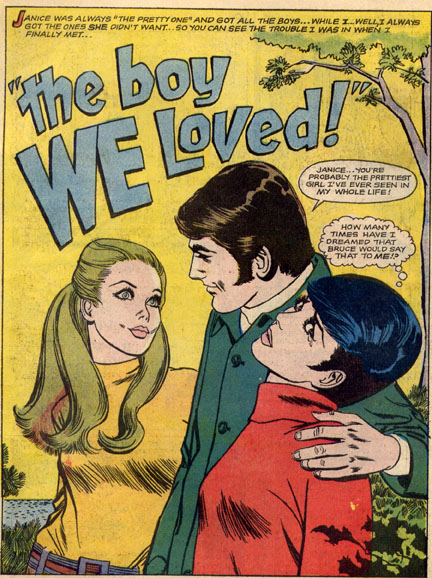
 Howdy howdy howdy. This is Johnathan and I have been problem solving. You see, I used to arrange my comics according to my general "save the best for last" policy, but found myself running out of steam with regards to the ol' reviews by the time I reached the end of the pile. In effect, I was writing a whole lot more about the comics that I wasn't as excited for and sometimes barely anything about the ones that I was all worked up about. Unacceptable, says I, so I nerded up and shuffled this week's pile and deployed some
  This comic's had plenty of previews and teasers and stuff scattered around - it seems like there's a new one every time I go to the
  I was torn over whether to buy this or not, but ultimately could not resist Lockjaw's mournful eyes. I am glad that I am powerless against dog manipulation, in this case. Heck, I'm not even out half a sandwich.
 Last second Battle for the Cowl tie-in! Catman, Bane and Ragdoll play Batman for the evening! There's lots of pretty at-night lighting and crazy fighting in this one, plus Ragdoll being creepy in a Robin outfit.
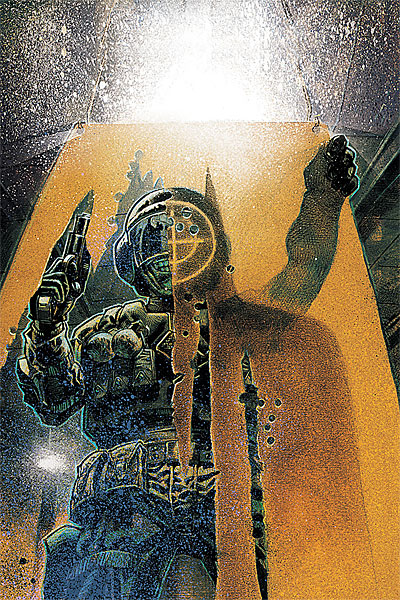 I was very fond of Legends of the Dark Knight back in the day - it was home to some of my favourite Batman yarns ever ("Going Sane", woo!) and was some of the most approachable Batman around during the mid-Nineties. Therefore, I'm happy that Batman Confidential is starting to come into its own as a successor to that fine series. What with the Wrath stuff a while ago and the King Tut arc that just finished, Batman's rogues gallery is getting some neato new blood. This story might do the same - let's see how the second issue turns out.
 Ugh. Blech. Blah.
 Not that I, musical plebian that I am, had any idea who Gerard Way was before I got that Free Comic Book Day Umbrella Academy preview a couple of years ago (or was it last year? Curse my human memory), but he sure does stand as an object lesson in not assuming that a famous person is going to suck when they decide to try something wildly different from what they became famous for. The Umbrella Academy is good times! Dysfunctional super-family with neato powers and wildly eccentric physical appearances good times, crazy villains with world-wrecking plots good times, Eiffel Tower on the Moon thanks to the foiled machinations of cryogenic zombie Gustave Eiffel good times. Pretty friggin’ good good times, is what I’m trying to get at. It’s not just a bunch of good weird ideas either - there’s some damn fine writing in there as well, both in terms of dialogue and plot. I was going to say that I liked the first series (arc? Volume? Dammit, this thing’s numbered 12 in the indicia. WHAT’S GOING ON?) a bit better, but on reflection I think I’m just upset about the Time Trapper being back and taking it out on stories involving time travel. Number Five’s origin a few issues ago was terrific, for example, so yeah: I like ‘em the same (a lot).
 Well, awright. This is another comic that I’ve seen previewed around a lot lately and the previews did not steer me wrong. The story is concerned with Tom Taylor, whose father wrote a series of thirteen Harry Potter-esque novels with him as the protagonist and then promptly disappeared. Tom now makes a living appearing as his fictional counterpart at conventions and bookstores, while simultaneously trying to distance himself from the whole thing. And then weird stuff starts happening.
 Hey, another mystery! One deepened by the fact that I have no idea what Nemesis is all about just now or when exactly he appeared in Final Crisis - in one of the side stories that I missed? Final Crisis: Submit? Final Crisis: Insist? Final Crisis: Soft-Shoe? I have no idea, nor have I been reading Wonder Woman lately (for no good reason, especially given how much I enjoy Gail Simone), nor Checkmate nor anywhere else that he might be appearing. How he might have ended up in a comic that reads like The Prisoner: The New Class is a question that might require some homework on my part, or maybe not. I remember liking him back in my Suicide Squad reading days, so maybe that’s enough. Speaking of which, Count Vertigo’s in this book too, along withCameron Chase from, uh, Chase and a lot of references to Jack Kirby’s Omac. Well, it looks good and the first issue setup is done - it’s starting out confusing so it’s either going to come to a satisfying resolution or end in a jumbled mess like some comics about wheelchair-bound computer nerds that I could mention. Let’s watch and see, shall we?